Monday, August 29, 2011

Thursday, January 27, 2011
Child Sex Trafficking at the Super Bowl
Child Sex Trafficking is a major problem at the Super Bowl. According to the Dallas Police Department children exploited through sex trafficking have an average life expectancy is just seven years . The average age a child is tricked and trapped in sexual slavery is 13 years old . These children are beaten, brutalized and tortured for the profit and pleasure of others.
Please sign this petition, post this link to your wall, and do anything else in your power to raise awareness of this cruel injustice. People can only do these evil things to children when nobody is watching.
Monday, August 16, 2010
The Baffled Mind
 Alissa Wilkinson posted this on her blog recently, and I thought it was worth sharing. It's a quote from Wendell Berry. I'm sorry I don't know the original source of the quote, but here it is:
"It may be that when we no longer know what to do, we have come to our real work, and that when we no longer know which way to go, we have begun our real journey. The mind that is not baffled is not employed. The impeded stream is the one that sings."
(Note: the picture above is of Wendell Berry, not Alissa Wilkinson)
Monday, July 19, 2010
Top 5: Christian Albums That Have Aged Well
 In high school, I was a big fan of Christian music. I was a faithful attender of my church youth group, and I was always up on the new releases of the big Christian artists. I am probably one of the only people to have seen the Newsboys "Airdome" tour, not once, but twice. In fact, if you were to name a Christian band that was popular in the late 90's, the odds are excellent that I have seen them live at least once (go ahead, try me).
Yes, I am a child of the 90's Christian music movement. However, I have been spending a lot of time sorting through my iTunes library (doing a bit of housekeeping and trimming the fat where it is necessary), and I have found that (no surprise here) not much of that old music has held up. Christian music is not like a fine wine; it does not, as a rule, age well. There was certainly a time in our world that songs taunting people in hell by pointing out that they are no longer able to eat breakfast cereal were in high demand, but I think those days may be behind us. In fact, I was once in a conversation with someone who manages a Christian retail store, and they explained to me that most music in their inventory has a fairly short shelf life. It does not take long for a Christian album to go from being a huge hit to becoming fodder for the clearance bin.
I have largely found this to be true in my own aging music collection. I have found a great deal of the music that I once loved has become lame, preachy, and cheesy, none of which are qualities I look for when I shop for new music.
With all that said, I will acknowledge that there are some definite exceptions to the rule. Some of the music from this phase of my life, I have found, still has some life left in it. Against the odds set by their outdated peer group, there are those albums and artists that have been able to transcend the flash-in-the-pan nature of Christian pop art and have left us with some pretty good music. And now, without further ado, my top 5 Christian albums that still hold up...
 5) "Great Lengths" (Artist: PFR)
PFR was a great group of musicians. While some of the lyrics from certain albums could certainly be described as "preachy," the music itself holds up. This band currently stands as the only Christian group for whom I'm secretly hoping for another reunion album/tour.
 4) "Without Condition" (Artist: Ginny Owens)
There are some truly beautiful songs on this album.
 3) "40 Acres" (Artist: Caedmon's Call)
I'm sure some more devoted Caedmon's Call fans than myself would have something to say about my choice of "40 Acres" as their best album, but it really is. This is where we see the range and diversity of Derek Webb, who continues to make good music. Songs like "Somewhere North," "Table for Two," and "Faith My Eyes," are reason enough to keep this one in the playlist.
 2) Self-Titled Album by Jars of Clay
This was probably the biggest album used by Christians to convince themselves that our music could be cool, too. The single, "Flood," received a lot of mainstream radio play, and it was a good representation of 90's alt-rock (in fact, if you look closely at the album cover, you'll even see some long hair and a flannel shirt). This album holds up as well as any other that came from this period in music. Gin Blossoms, Toad the Wet Sprocket, and Del Amitri had nothing on Jars of Clay.
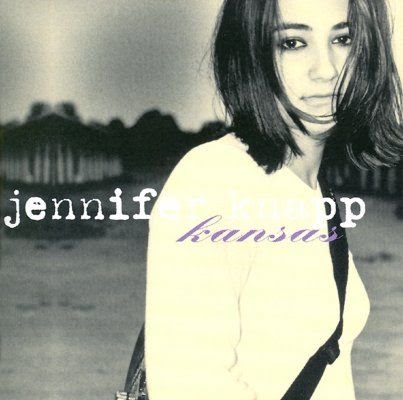 1) "Kansas" (Jennifer Knapp)
I still listen to Jennifer Knapp. She actually just released a new album, and it's really good. "Kansas" was her first release, and it holds up quite nicely. She has always been a good songwriter, and one listen to "Kansas" will show this to be true.
I didn't want to make a list of the Top 5 albums I needed to purge from my iTunes, but I probably would have called it the Love Liberty Disco Memorial List.
Tuesday, June 29, 2010
"Sunday's Coming"
This video has been circulating for a while, but I thought it would be good to post it here.
"Sunday's Coming" Movie Trailer from North Point Media on Vimeo.
Wednesday, June 23, 2010
Reading List 2010 (or what's left of it)
 I just finished all of my course work for graduate school. I haven't quite graduated yet; that won't happen until December. But I am done with commuting, classes, exams, papers, and group projects. To celebrate, I have compiled a list of books that I have been wanting to read for a while and then, after compiling the list, I had to decide which ones would get read sooner than later. That was tough. Inspired by another blog that I read (Alissa Wilkinson), I've decided to make annual reading lists at the beginning of every year. I like to set goals for myself, and I like to read. So, a beginning-of-the-year reading list is a natural fit for me. I realize that it is not January, but as far as I'm concerned the year is just beginning. I don't have to translate anything from Greek or Hebrew, and I'm no longer hip-deep in documents from the early church fathers. So, for me, this is the beginning. And as such, I have my "Back Nine" Reading list for 2010. Here it is. (Audiobooks are excluded from this list)
Nonfiction
Big Man - Clarence Clemmons and Don Reo
Intuitive Leadership - Tim Keel
Tribes - Seth Godin
Save the Cat - Blake Snyder
The Artist's Way - Julie Cameron
Understanding Comics - Scott McCloud
Shop Class as Soulcraft - Matthew Crawford
Justice - Michael Sandel
Essays
Shakespeare Wrote For Money - Nick Hornby
Killing Yourself to Live - Chuck Klosterman
Assassination Vacation - Sarah Vowell
Theology
Secrets in the Dark - Frederick Buechner
Culture Making - Andy Crouch
The Sacred Way - Tony Jones
Invitation to the Journey - Robert Mulholland
This Beautiful Mess - Rick McKinley
In the Beginning - Henry Blocher
Understanding Genesis - Nahum Sarna
The Fidelity of Betrayal - Peter Rollins
Christ Plays in Ten Thousand Places - Eugene Peterson
After You Believe - N.T. Wright
Fiction
High Fidelity - Nick Hornby
The Amazing Adventures of Kavalier and Clay - Michael Chabon
Glittering Images - Susan Howatch
Poetry
Ballistic - Billy Collins
Compass of Affection - Scott Cairns
Primitive Mentor - Dean Young
Wednesday, May 12, 2010
Violence for Jesus?
I have no words...
| The Daily Show With Jon Stewart | Mon - Thurs 11p / 10c | |||
| God Smacked | ||||
| ||||
Subscribe to:
Posts (Atom)